Melons Australia's CEO Update


We appreciate that some in our sector are doing it very tough, we are here to help. So please, if there is anything that the Melons Australia team can support or assist you with feel free to reach out.

Johnathon Davey - CEO

E: ceo@melonsaustralia.org.au

P: +61 407 032 023

www.melonsaustralia.org.au

Early Bird Tickets Now Available! 2026 Australian Melon Conference


Dates: Wednesday 7th October - Friday 9th October

Location: Field Day: Ayr, Conference: Townsville

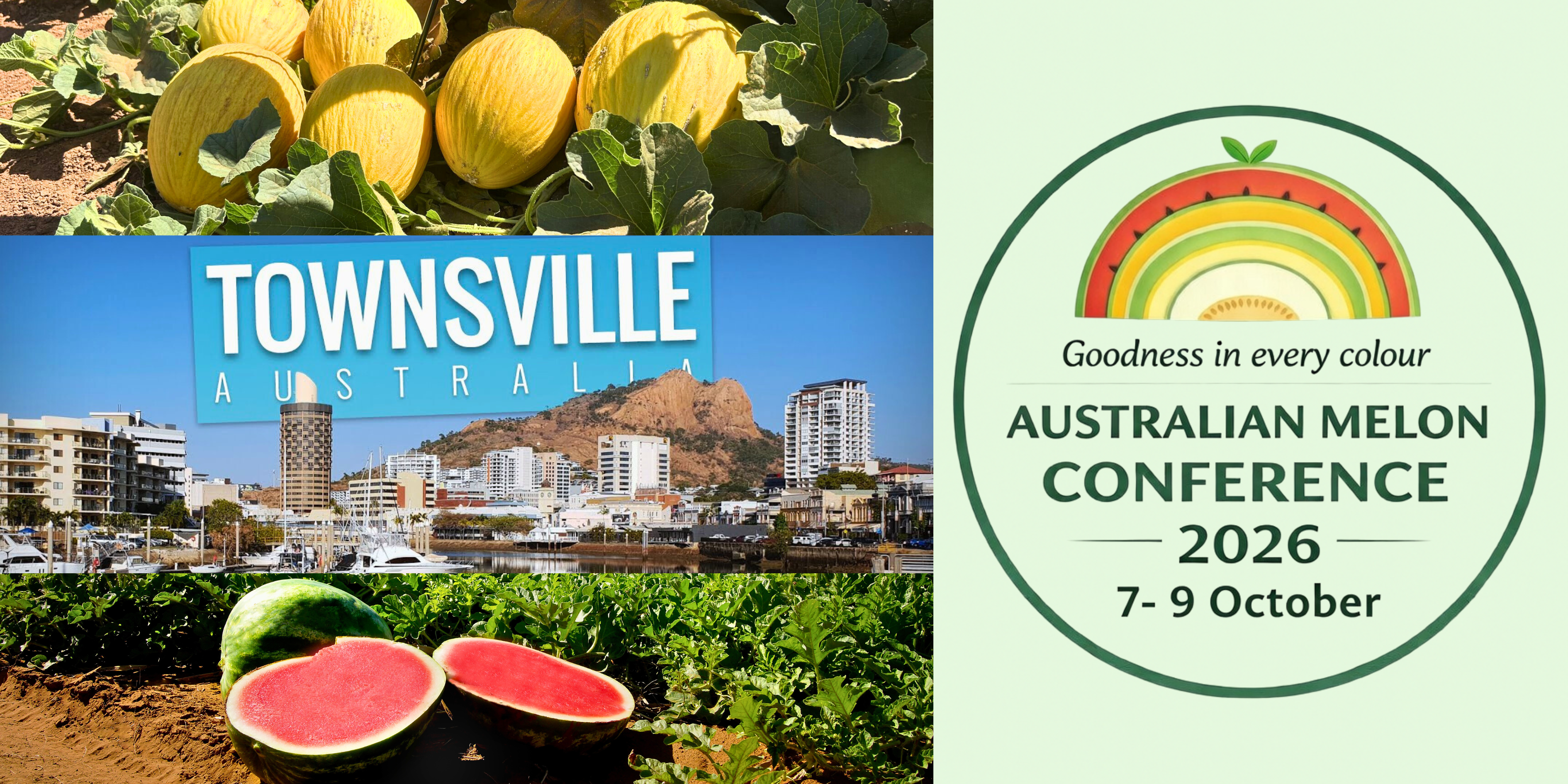
Registrations are now open for the 2026 Australian Melon Conference, with early bird tickets available until 30 June. Hosted across two Townsville venues: The Ville Resort-Casino and the Townsville Entertainment & Convention Centre, this year’s event promises three days of industry networking, knowledge sharing, and collaboration.

The conference program will combine practical, hands-on experiences with valuable industry insights. Kicking off on Wednesday 7 October, attendees will visit the Ayr Research Station for a field day featuring variety trials, chemistry trials, technology showcases, and R,D&E demonstrations.

Thursday 8 October will focus on research, development, and innovation, with interactive sessions and workshops exploring the latest advancements shaping Australia’s melon industry. That evening, delegates will come together at The Ville Pavilion for the Gala Dinner, featuring drinks, canapes, a two-course meal, entertainment, and guest speakers.

The conference will conclude on Friday 9 October with a half-day program covering melon marketing, sustainability, compliance, supply chain innovation, and future business opportunities through keynote presentations and panel discussions.

The event offers a valuable opportunity for growers, researchers, retailers, and industry stakeholders to connect, learn, and collaborate on the future of the melon industry. A detailed conference agenda will be released in the coming weeks. Contact us for exclusive conference rates at The Ville, and Ardo - comms@melonsaustralia.org.au

CLICK HERE TO SEE OUR PARTNERS FOR THE EVENT

A detailed agenda for the conference will be released in the coming weeks.

VM22001 Project Update


Virus diseases in melons – what are they and what can you do?

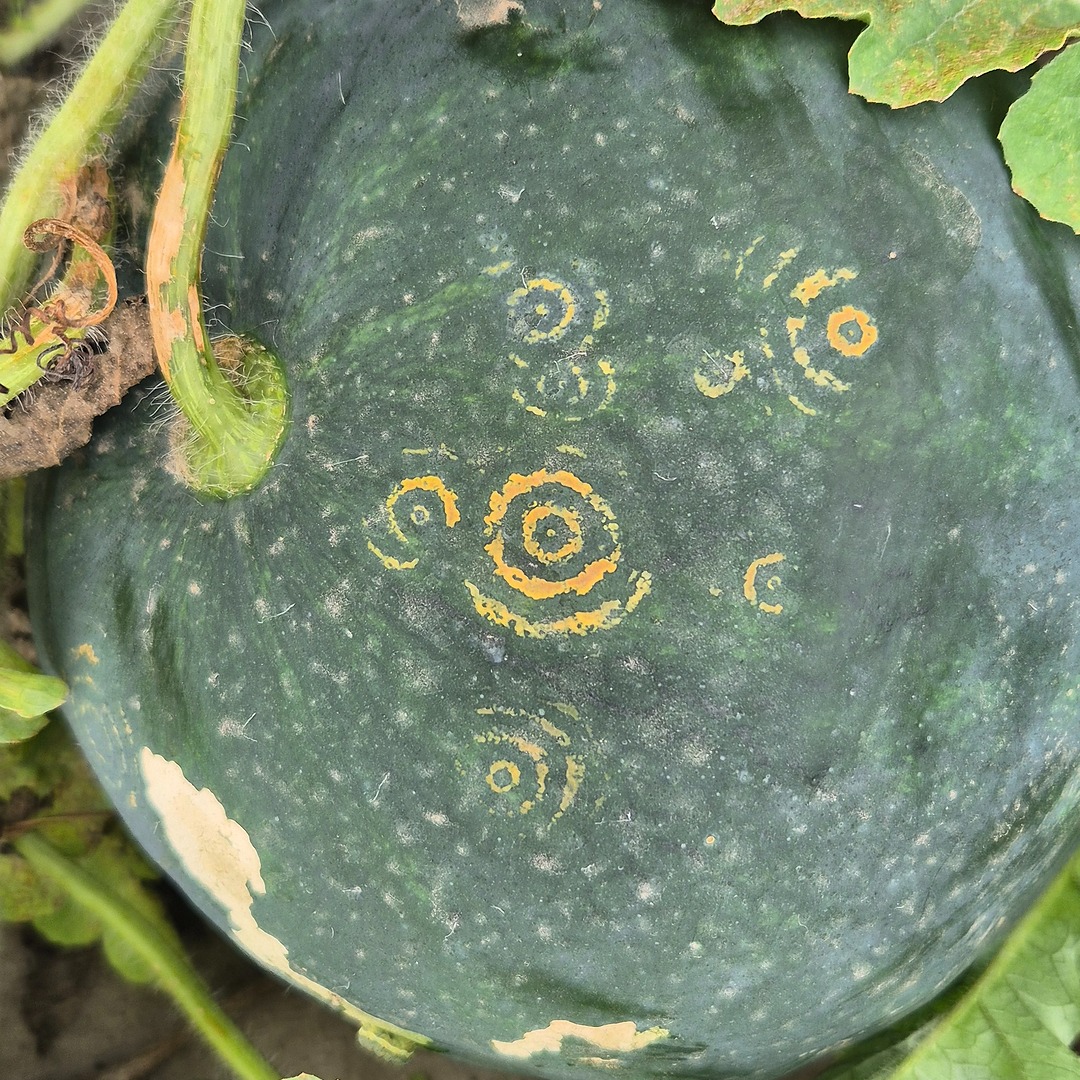
Mosaic disease of cucurbits is caused by papaya ringspot virus (PRSV), watermelon mosaic virus (WMV) and zucchini yellow mosaic virus (ZYMV). Any of these three Potyvirus species can cause the disease. Geographically, mosaic disease is mostly caused by PRSV in Queensland, WMV in New South Wales and ZYMV in Western Australia. As all three viruses can occur in all growing districts, mixed infections can occur; however, this is not common in Australia. Mosaic disease affects all cucurbit crops including melons. Typical symptoms include a yellow-green mosaic pattern on leaves and concentric ring patterns on fruit (Figure 1). The viruses are spread by certain aphids including green peach aphid, melon aphid and cowpea aphid.

Additionally, viruses such as cucumber green mottle mosaic virus (CGMMV) and melon necrotic spot virus (MNSV) cause direct impact to melon crops where they occur. These viruses survive well in the soil and are difficult to manage. Although there is very limited distribution of these viruses in Australian melon growing regions, new detections do still occur and thus it pays to remain vigilant. These viruses, in addition to the potyviruses, can result in rejection to international markets if detected in export fruit consignments and all effect fruit quality.

For further information on management of these viruses please refer to factsheets for these viruses available through the Melons Australia website HERE

Watermelon fruit showing concentric rings typical of mosaic disease.

Sustainability Project Update

R&D Tax Incentive Correction


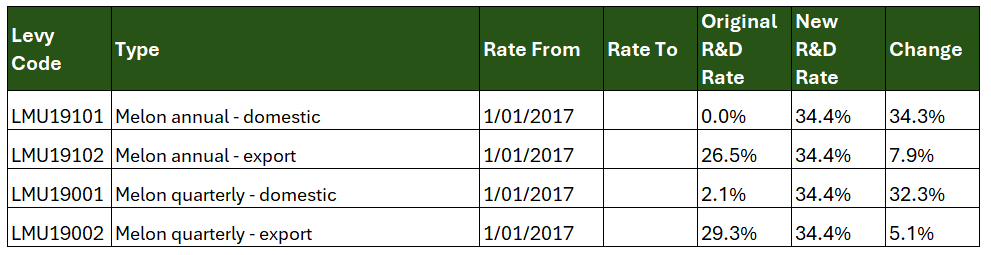
Hort Innovation has identified and corrected an error in the R&D Tax eligible levy rates previously provided for the Melon Fund for the 2024–25 income year.

The original rates were understated due to a calculation error during the levy rate analysis conducted in 2025. The corrected rates are now higher, which may increase the amount of eligible R&D expenditure linked to levies paid during that period.

A comparison table of the original and corrected rates has been provided for transparency. Growers are encouraged to speak with their tax adviser to determine whether the updated rates could result in an additional R&D Tax Incentive entitlement.

Melon Quality Project Update


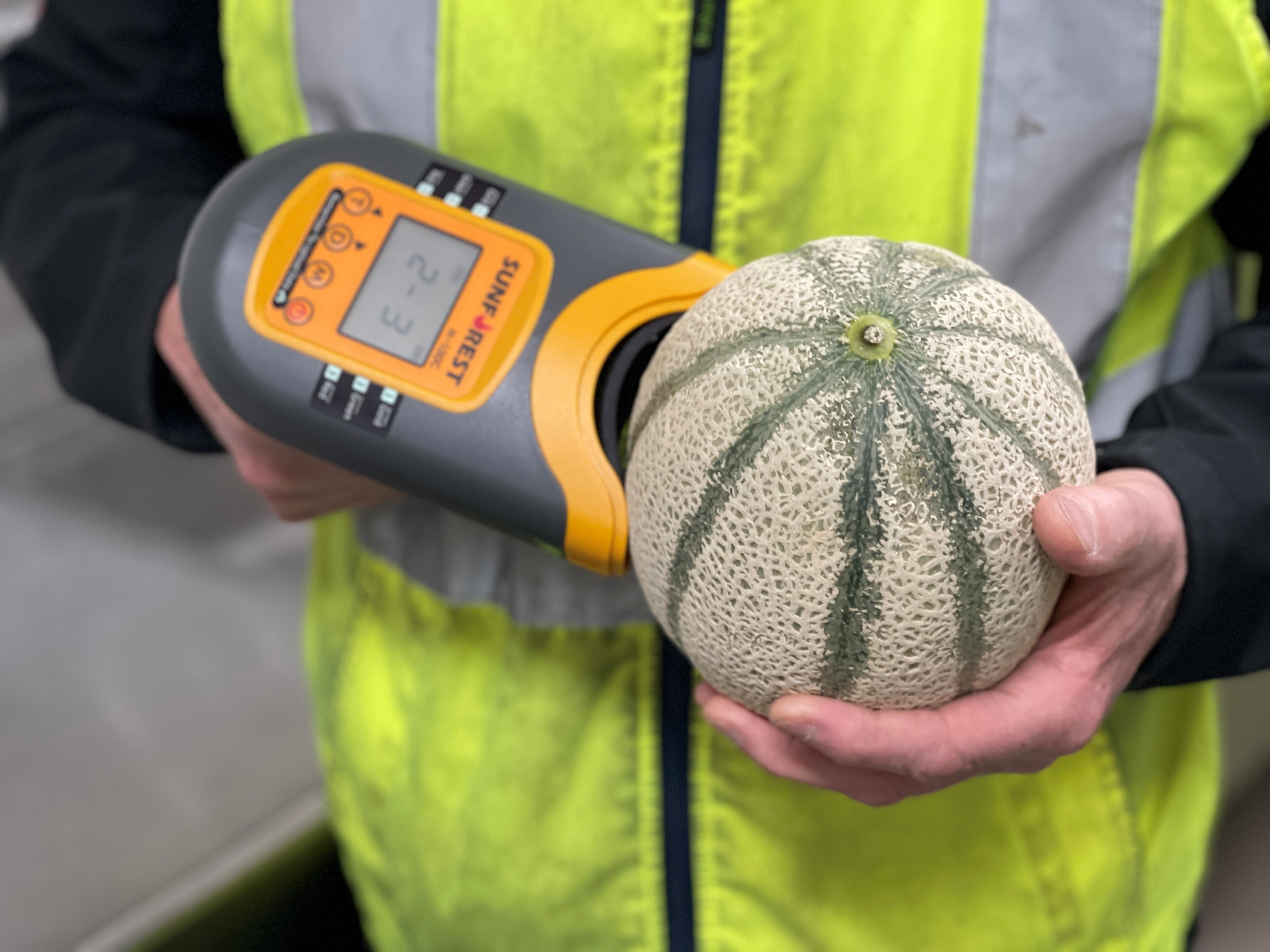
Work to find a viable non‑destructive measurement technology for Australian melons is continuing to move in a positive direction. Of all the options assessed so far, the SunForest NIR gun has proven to be the most promising for all melons.

The project team is now processing the large amount of on‑farm data collected using the SunForest NIR gun over recent months and is working closely with the Korean manufacturer to explore how the instrument can be customised for Australian melon varieties. The goal is to fine‑tune the calibration so the instrument will provide growers with accurate, consistent readings.

Building a robust calibration model that is tailored to Australian varieties requires scanning a wide range of fruit across a full season. The first model has already been developed, but many more fruit still need to be measured to provide enough data to calibrate the instrument correctly.

On‑farm testing has shown that the SunForest NIR gun is easy and comfortable to use, and - with the right calibration - has the potential to deliver the precision required for confident on‑farm maturity measurement. Although the calibration process is still in its early stages, progress so far is encouraging, and each round of scanning brings the project closer to confirming whether this technology can become a reliable non‑destructive option for Australian melon growers.

Have Your Say: Biosecurity on Your Farm


Vegetable & melon growers across Australia are invited to take part in important industry research.

La Trobe University want to hear about your real-world experience with on-farm biosecurity – what works, what doesn't, and what it actually costs.

What is this research about?

This project looks at the real costs and benefits of biosecurity practices on vegetable and melon farms.

They're speaking directly with growers to understand:
  • What biosecurity measures are currently used, which ones are not
  • Why growers adopt or don't adopt these measures
  • The true costs (time, money, labour, disruptions)
  • The real benefits (pest/disease protection, productivity, market access)
  • What could improve adoption more widely?
 

The goal is simple: provide practical, evidence-based insights on how to support industry decisions about protecting vegetable and melon farms from pests, weeds and diseases.

Why get involved?

Your input will help:
  • Shape more practical and realistic biosecurity approaches
  • Ensure growers' experiences and needs are accurately represented
  • Support approaches that affect business continuity if new pests, diseases or weeds are found
  • Protect the Australian vegetable and melon industry from avoidable losses
 

What's involved?
  • A one-on-one interview (~2 hours) at a time and place that suits you
  • Discussion of your farm practices and experiences
  • Participation is completely confidential; no names or identifying details will be shared
 

The interview process has been approved by La Trobe University Human Ethics Committee.

About the project

This research is part of a PhD project at La Trobe University, led by Joseph Sithole and supervised by:
  • Dr Tim Clune
  • Dr Scott Mattner
  • Dr Doris Blaesing
 

The project is funded by industry levies and government contributions via Hort Innovation.

Get involved, your experience matters!

Interested in sharing your experience? Nominate a time and place that suits you.

Contact Joseph Sithole:
  • Phone: +61 49 979 0835
  • Email: j.sithole@latrobe.edu.au
 

Weed Management in Plasticulture – Grower Survey


What are the major weeds in your plasticulture systems, and how are you managing them? Have you heard about Anaerobic Soil Disinfestation (ASD) as a potential weed management option?

This survey is part of the Hort Innovation–funded “Next Generation Weed Management – ASD” project, led by La Trobe University.

We invite farmers who grow crops on mulch to share their insights through this short survey (takes ~5–8 minutes):

2026 Australian Biosecurity Awards | Nominate a grower today


The Department of Agriculture, Fisheries and Forestry (DAFF) has opened nominations for the 2026 Australian Biosecurity Awards, recognising individuals, groups and organisations making outstanding contributions to Australia's biosecurity system.

The awards celebrate leadership, innovation and commitment across nine categories, including industry, science and innovation, environmental biosecurity, education, community, government, and the Farm Biosecurity Producer of the Year Award.

Sponsored by Plant Health Australia (PHA) and Animal Health Australia (AHA), the Farm Biosecurity Producer of the Year Award recognises growers and producers demonstrating excellence in on-farm biosecurity practices and leadership.

Nominations close at 5:00 pm AEST on Tuesday, 16 June 2026.

Varroa Mite and the effect on Pollination Services


Join Agriculture Victoria for a comprehensive session on the effect Varroa mite will have on pollination services, horticulture businesses that rely on pollination, how this will impact your clients/ your business and how you as an agronomist/grower can be best placed to offer support and prepare for the change.

Topics
  • What has changed and what is the expected effect
  • What is a good beekeeper and how do I find them
  • Hives - what is healthy, how many are required and when
  • What does a beekeeper want
  • Tips for successful beekeeper engagement
  • Pollination from a beekeeper’s perspective
 

Tuesday 16 June

Location: Lilydale Lakeside Conference and Events Centre, 1 Jarlo Drv, Lilydale VIC 3140

Monday 22 June

Location: Agriculture Victoria Tatura, 255 Fergussons Rd,Tatura, VIC, 3616

Tuesday 30 June

Location: Tooleybuc Sporting Club, Lot 1 Lockhart Rd, Tooleybuc, NSW, 2736

All session times: 12.30pm – 3.00pm (lunch provided) Cost: Free

Presenters: Joe Riordan, Bee Sure and Matt Lorenz, Central Victorian Commercial Beekeeper

Registrations open: Industry Liaison Officer (ILO) workshop | Queensland 18 August


Plant Health Australia (PHA), in conjunction with QDPI, will deliver Industry Liaison Officer (ILO) training in Bundaberg, Queensland on 18 August 2026, registrations are now open.

Why you should attend

PHA’s ILO training is designed to provide participants with the necessary skills and knowledge to effectively respond to biosecurity emergencies and support plant industries. By attending the training, you will:
  • learn about the incident management structure and the critical function of an ILO during a response
  • learn practical skills and knowledge to how an ILO can contribute to biosecurity response
  • connect with government stakeholders and plant industries.
 

Participants will gain practical skills and knowledge to effectively represent their industry during biosecurity emergency responses, including understanding incident management structures, the role of an ILO during a response, and opportunities to connect with government stakeholders and plant industries.

Registrations close on 3 August 2026. For further information or assistance with registration, contact the PHA training team at training@phau.com.au.

2026 Australian Melon Conference - Tickets Now Available


Dates: 7-9 October 2026

Locations: Ayr and Townsville, QLD

Contact us for exclusive accommodation rates - comms@melonsuastralia.org.au


Contact:

Melons Australia

E: ceo@melonsaustralia.org.au

Copyright © 2026 Melons Australia

All rights reserved.

unsubscribe from this list

Original text
Rate this translation
Your feedback will be used to help improve Google Translate